Spine surgery took me off the bike for nearly two years, and by the end of it I had talked myself into believing that getting back on one wasn’t worth the risk. It took a few days in the Netherlands to undo that — and to show me how much of the fear was about the streets rather than the riding.
How it started
During my time living in Chicago, I became an avid cyclist. It had replaced the ‘L’ for the vast majority of my trips, and thanks to wonderful infrastructure like the Lake Shore Drive trail, it was often quite peaceful. Of course, you can’t stay on the trail forever, and eventually you end up in mixed traffic and the familiar patchwork of cycling infrastructure common in many American cities. That experience was often far less peaceful, but also fairly normal.
The abrupt stop
By the time this primary mode of transportation ceased in November 2023, I had traded the Chicago lakefront for the streets of New York. The stop was abrupt: I woke up out of the blue experiencing substantial back pain. It was surreal to be told I needed spine surgery at 34.
It was heartbreaking to lose the ability to cycle for a bit, but I was grateful to live in a walkable and transit-oriented city nonetheless. Sitting for long periods of time was quite painful, but you can stand on the subway when you need to — you can’t in a car. Walking was still totally viable, and a good way to still get regular movement. NYC road infrastructure is often unforgiving; every pothole on a bike became a potential flare-up that I rarely experienced on the train.
The recovery and fear of returning to the bike
By April 2025, after surgery and a long recovery, I was finally cleared to ride again. But after nearly two years away from cycling, I’d become deeply anxious about getting back on the bike. Being plugged into urbanist advocacy didn’t help either: I was constantly reading about rising traffic fatalities in NYC and watching street safety improvements stall or get watered down. After everything I’d gone through physically, it became easy to convince myself that getting back on a bike simply wasn’t worth the risk.
Back on a bike — in the Netherlands
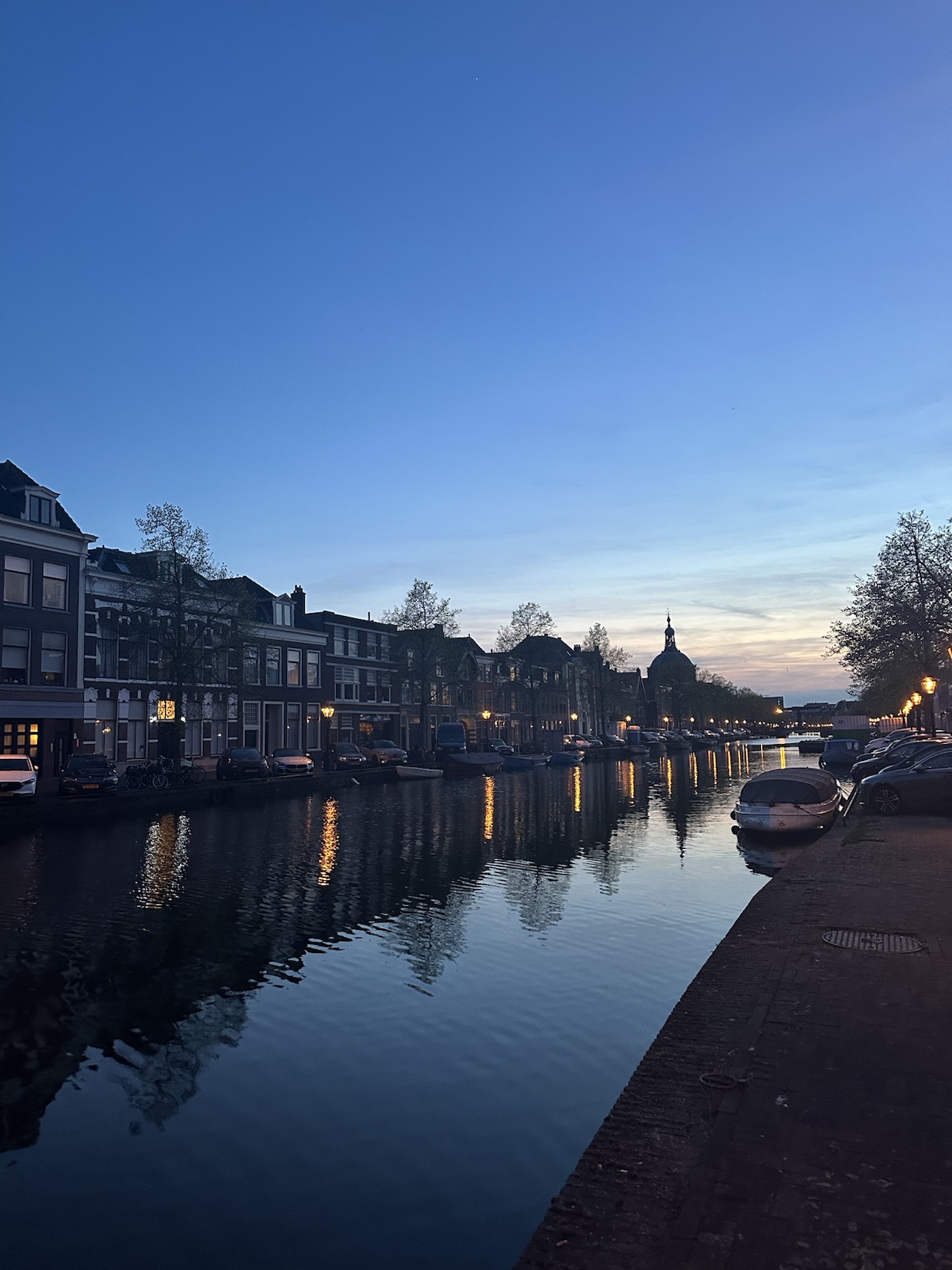
A few months after being cleared to ride again, I found myself living temporarily in Leiden, a small Dutch city between Amsterdam and The Hague. I’d read Curbing Traffic: The Human Case for Fewer Cars in Our Lives by Chris and Melissa Bruntlett — a chronicle of their own time living in the Netherlands and the benefits that result from treating cars as visitors rather than owners of the road — so I had some sense of what to expect, but those concepts actually became quite personal to me.
For the first week I was there, I only walked. After two years of pain, surgery, and recovery, I’d developed a real fear of getting back on a bike. Even after being medically cleared, it took a long time to unlearn the subtle protective ways I’d taught myself to move my body.
Logically, I knew where I was, and I’d read about how incredible the experience of cycling was there. I saw thousands of people cycling around town, the massive bike parking lots, the visibly separated and smooth cycle lanes everywhere I could see. I realized that if I wanted to rekindle this love of cycling, I was in one of the best places in the world to do it. For the first time in nearly two years, I got back on a bike.
My host in Leiden had left me access to a pedal-assisted e-bike. It was a perfect day; very sunny and warm with a light breeze. After a simple breakfast, I opened up the map and decided that I would take a trip to the nearby town of Voorschoten, which is 7 kilometers (4.35 miles) away from where I was staying. I used to ride 25—35 kilometers (15—20 miles) fairly regularly, and my last significantly long ride before the injury had been the NYC 5 Boro Bike Tour, a 64 kilometer (40 mile) trek. I grabbed the keys, put on my helmet, headed downstairs, and clipped the battery into the e-bike.
It only took a couple minutes for the euphoria to come rushing back. The smooth pavement, the light breeze off the canals, the quiet hum of other cyclists passing by, the traffic signals that seemed designed to keep people moving instead of waiting — it all felt unreal. Yes, a few mildly annoyed cyclists zoomed past me, perhaps a little frustrated that I was going a bit slow and was a bit wobbly at first, and I quickly realized there were some unspoken rules of the road. Despite it all, I was back. I remembered exactly why I loved cycling. For the first time in years, I stopped thinking about my injury entirely.
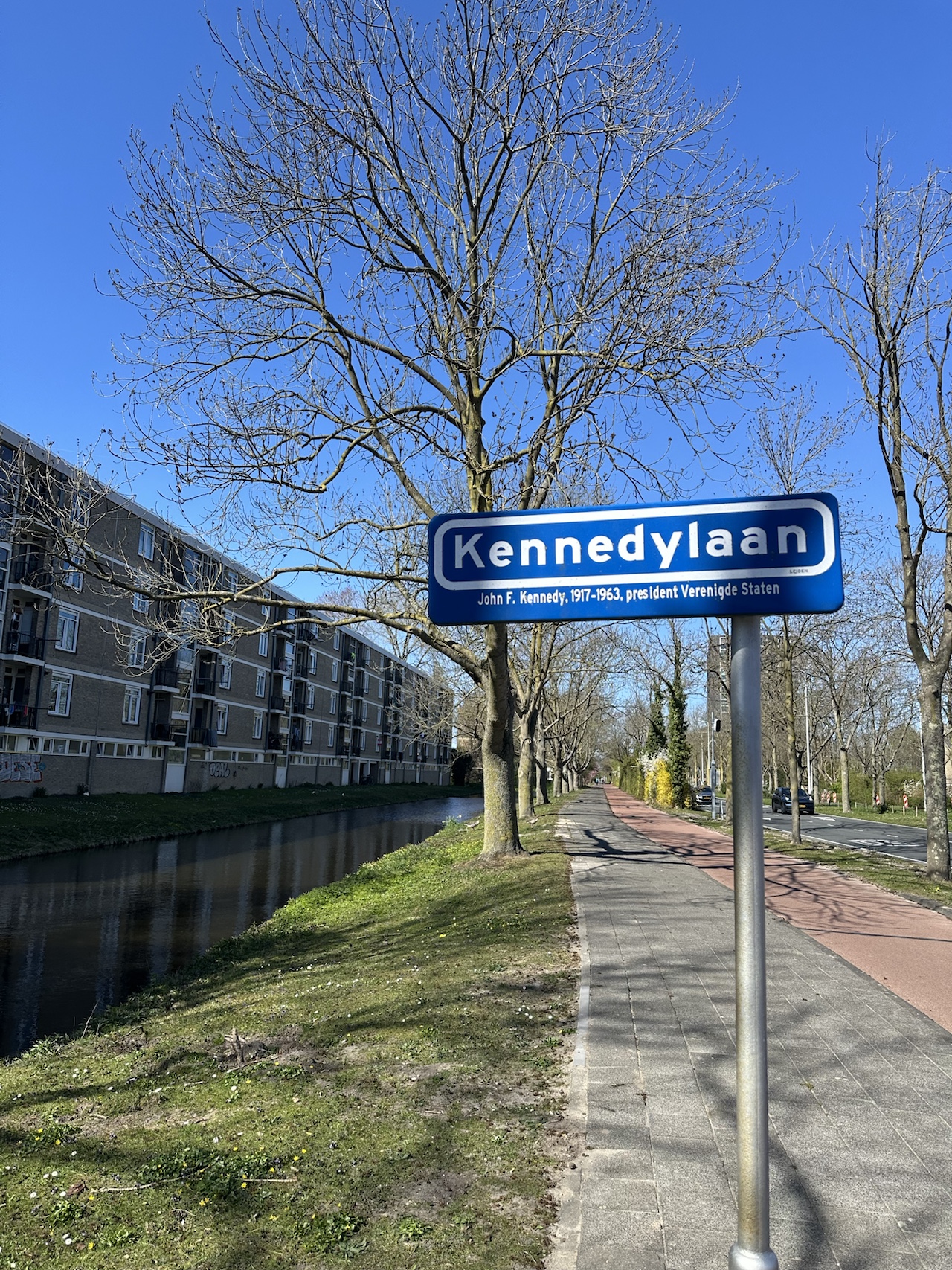
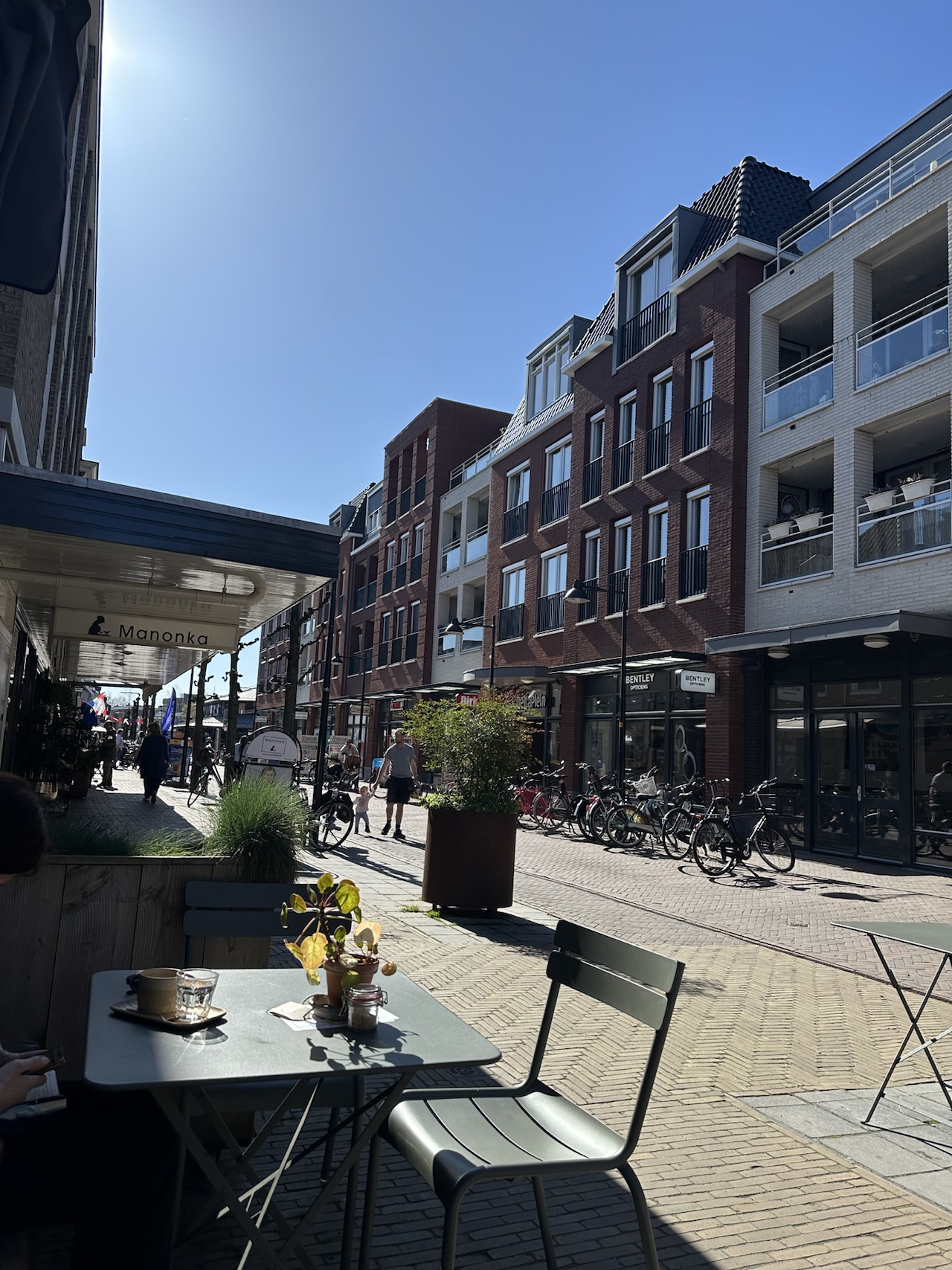
Along the way, I couldn’t stop appreciating how lovely it was. Everyone cycles — children, commuters, older adults, tourists, parents carrying groceries. I saw people moving through the city in every possible way: on bikes, mobility scooters, wheelchairs, on foot, with children, with groceries, dressed for work, dressed casually. It quietly dismantled the idea that accessibility and cycling infrastructure are somehow in conflict with one another. Through the open fields and windmills, I arrived about 25 minutes later in Voorschoten, where I walked the bike to a nearby café and sat outside on a beautiful pedestrian plaza enjoying the lovely day and feeling accomplished, proud, and as though I reconnected with an old friend.
Back in NYC, cycling gradually moved from a source of anxiety back into my routine and reclaimed its place among the ways I move through the city.
Accessible cities
What I experienced in Leiden, and broadly in NYC as someone living with a temporary physical impairment, dismantled an assumption I’d held without examining it: that cars are the default solution for people who can’t move easily. I have family members with various physical challenges, and I’d absorbed that logic without questioning it. But during my own recovery, the things that actually kept me going weren’t cars. It was walkable blocks, trains I could stand on, streets that weren’t punishing to navigate slowly. The Netherlands expanded that: ample pedestrian spaces, smooth pavement, and infrastructure that allowed movement at your own pace. That’s accessible design, and it looks nothing like a parking lot. It’s the vision described in Curbing Traffic — Chapter 7, “The Accessible City,” in particular — and living it firsthand put a new personal perspective on urban mobility.
More than anything, the Netherlands felt like a place designed to make movement feel calm, intuitive, and human. After two years away from the bike, that experience gave me something I hadn’t realized I’d lost: confidence.